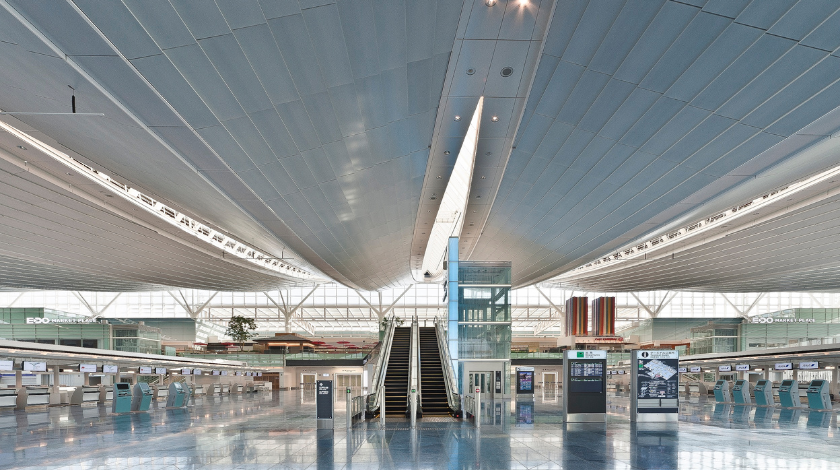
Whenever I walk into a major airport terminal, I feel a very specific kind of energy. It is a mix of nervous anticipation, the smell of jet fuel and coffee, and the constant hum of thousands of people moving toward different corners of the globe. For most of us, the airport is just a place we pass through. It is a transition zone. We worry about our boarding passes, our luggage weight, and finding the right gate. But behind the scenes, there is a massive organization working 24 hours a day to make sure that the floor is clean, the runway is safe, and the planes arrive on time. This organization is usually the National Airports Corporation, or the NAC.
To put it simply, a National Airports Corporation is a body, often government-backed or a state-owned enterprise, that is responsible for the management, operation, and development of a country’s airports. Think of them as the landlord and the chief operator of the gateway to the nation. They don’t own the planes, but they own the ground the planes land on. They don’t employ the pilots, but they manage the people who tell the pilots where to go. They are the invisible engine that keeps the country connected to the world. Without a properly functioning National Airports Corporation, a country is effectively isolated, its trade slows down, and its people lose their most efficient way to see the world.
I have always felt that airports are emotionally significant places. They are sites of tearful goodbyes and joyful reunions. But from an economic standpoint, they are even more critical. They are the primary entry points for international investment and tourism. My personal perspective on the airport experience has changed over the years. I used to see them as just big, confusing buildings. Now, after seeing how much effort goes into coordinating a single flight, I view them as marvels of human engineering and logistics. The National Airports Corporation is the brain that coordinates every single one of those moving parts.
The Core Mission of a National Airports Corporation
The absolute first priority of any National Airports Corporation is safety. This is not just a corporate slogan. In the aviation world, safety is a life-and-death commitment. Every decision made by the NAC is filtered through the lens of risk management. When you look out the window of a plane and see the runway, you are looking at one of the most highly regulated pieces of pavement on earth. The NAC ensures that these runways are free of debris, that the lighting systems work in the middle of a storm, and that the emergency fire and rescue teams are ready to respond in seconds. This level of preparation is what allows us to sleep during a flight or trust that our loved ones are safe in the air.
Infrastructure is the second major part of their mission. People often think of infrastructure as just concrete and asphalt, but for the NAC, it is a living system. It involves complex radar systems, fuel farms that can store millions of gallons of kerosene, and intricate baggage handling systems that use miles of conveyor belts. Building these things requires massive capital investment and long-term planning. An NAC cannot just think about next year. They have to think about what air travel will look like in 2050. They have to ask questions like: Will planes be larger? Will they be electric? How much power will a terminal need to charge thousands of passenger devices? It is a constant game of looking into the future and building for it today.
Beyond the technical side, the National Airports Corporation carries the weight of national pride. The airport is the first thing a visitor sees when they arrive in a country. It is the “front door.” If the airport is crumbling, inefficient, or dirty, it sends a negative message about the entire nation. If it is modern, welcoming, and efficient, it reflects a country that is organized and open for business. I remember arriving in a country where the NAC had clearly invested in local art and architecture within the terminal. It immediately gave me a sense of the culture and the pride of the people there. That is the gateway status in action.
The Operational Side: What Happens Behind the Scenes?
Managing the flow of millions of people is a task that would make most managers quit. On any given day, a National Airports Corporation has to coordinate between airlines, customs officials, immigration officers, retail tenants, and security personnel. It is a massive human puzzle. The goal is to move someone from the curb of the airport to the seat of their plane as quickly and safely as possible. This requires data. Modern NACs use sophisticated software to predict when the crowds will be the thickest so they can open more security lanes or deploy more staff to the check-in areas.
One of the most critical roles handled or overseen by the NAC is air traffic control and ground management. While the pilots fly the planes, the ground crews and controllers manage the traffic jam. Imagine a busy highway, but the cars are moving at 150 miles per hour and they can’t just stop and wait. The coordination required to land a plane every 60 seconds is breathtaking. On the ground, the NAC ensures that the “apron”—the area where planes park—is managed efficiently. Ground crews have to fuel the plane, load the bags, cater the food, and clean the cabin, all within a 45-minute window. It is a high-stakes dance that happens thousands of times a day.
Then there is the issue of security. This is perhaps the most difficult balance for the National Airports Corporation to maintain. On one hand, everyone wants to be safe. On the other hand, no one wants to wait in a two-hour line to be searched. The NAC is constantly looking for ways to use technology to make security faster without making it less effective. This is why we see things like 3D scanners for bags and automated gates for passports. The goal is to create a “frictionless” journey. In my experience, the best airports are the ones where you don’t even notice the security because it is so well integrated into the walk toward the gate.
Economic Impact: How Airports Feed a Nation
A National Airports Corporation is not just a service provider; it is an economic engine. The most obvious way it helps is through job creation. Think about the variety of people who work at an airport. There are engineers, accountants, janitors, chefs, security guards, and retail workers. But it goes deeper than that. For every one job at the airport, there are often three or four jobs created in the surrounding community. Hotels, transport companies, and local suppliers all thrive because the airport exists. When the NAC decides to expand a terminal, they are essentially creating a multi-year stimulus package for the local economy.
Tourism is another huge factor. In many countries, tourism is the primary source of foreign currency. If the National Airports Corporation does not maintain high standards, airlines will stop flying there, and the tourists will go somewhere else. I have seen regions where the local economy grew significantly simply because the NAC upgraded the runway to handle larger, long-haul aircraft. This opened the door to visitors from other continents who brought their money and spent it in local shops and restaurants. The airport is the lifeline for the entire hospitality industry.
We also have to consider cargo and trade. While we focus on passengers, a huge portion of what the NAC manages is “belly cargo”—the goods stored underneath the passengers’ feet. Fresh flowers, high-end electronics, and life-saving medicines move through these airports every day. The NAC provides the warehouses and the logistics hubs that allow this trade to happen. In a globalized world, speed is everything. If a business can’t get its product to market because the airport is inefficient, that business will fail. Therefore, the NAC is a silent partner in the success of every local exporter.
Finally, there is the concept of non-aeronautical revenue. This sounds like a boring business term, but it is actually what keeps many airports afloat. This is the money made from duty-free shops, restaurants, and parking. The NAC uses this money to subsidize the cost of the airport. If they didn’t have these shops, they would have to charge the airlines much more to land. This would lead to higher ticket prices for you and me. So, the next time you see a luxury watch shop or a fancy burger joint in the terminal, remember that their rent is helping to keep your flight affordable.
Modern Challenges and the Digital Shift
One of the biggest headaches for any National Airports Corporation is the problem of aging infrastructure. Many of the world’s most famous airports were built in the 1960s or 70s. They were not designed for the volume of passengers we see today. Upgrading these terminals while they are still in use is like trying to fix the engine of a car while it is driving down the highway at 70 miles per hour. You can’t just close the airport for a year to renovate. The NAC has to manage construction in small phases, often working in the middle of the night to minimize the impact on travelers.
The digital shift is also changing everything. We are moving toward the “Smart Airport.” This is a place where your face is your passport and your phone tells you exactly where your suitcase is. For the National Airports Corporation, this means a massive investment in IT infrastructure and cybersecurity. They have to protect the data of millions of people while making sure the systems are fast enough to handle the load. I personally love the new biometric gates because they save so much time, but I also recognize the massive technical effort it takes to make that 10-second scan work perfectly every time.
Then there is the environmental challenge. This is the elephant in the room for the aviation industry. Airports are massive consumers of energy and producers of waste. Today, a responsible National Airports Corporation must have a sustainability plan. I have seen airports that have covered their roofs in solar panels and others that have banned single-use plastics in all their restaurants. Some are even investing in infrastructure to provide sustainable aviation fuel (SAF) to airlines. It is a slow process, but the pressure from the public and from governments is making “green” operations a top priority for every NAC around the world.
The Human Element: Training and Staffing
At the end of the day, an airport is not a collection of buildings; it is a collection of people. The National Airports Corporation is responsible for the training and the culture of the workforce. This is a massive undertaking. They have to ensure that every employee, from the person cleaning the bathrooms to the person directing the planes, understands the importance of their role. A single mistake can have huge consequences. This is why you see so much emphasis on certification and constant retraining.
I have always been impressed by the hospitality side of airport management. It is a stressful environment. People are often tired, confused, or worried about their flights. The way the staff handles these situations is a direct reflection of the leadership at the NAC. I remember once being very lost in a foreign airport where I didn’t speak the language. A member of the airport staff noticed me looking confused and literally walked me to my gate, even though it was on the other side of the terminal. That kind of human touch is what makes an airport feel like a service rather than just a machine.
The NAC also has to manage a wide variety of cultures and languages. In an international hub, you might have passengers from 100 different countries passing through in a single day. The staff needs to be culturally sensitive and often multilingual. This requires a very specific kind of hiring and training program. The National Airports Corporation essentially has to run a global diplomacy mission every day, ensuring that everyone feels welcome and respected regardless of where they come from.
Conclusion: Looking Toward the Horizon
As we look toward the future, the role of the National Airports Corporation will only become more complex. We are entering an era of unmanned aircraft, flying taxis, and perhaps even commercial space travel. The NAC will be the one tasked with integrating these new technologies into our existing world. They will have to figure out how to keep our skies safe while embracing the next leap in human transportation. It is a daunting task, but if the history of aviation has shown us anything, it is that these organizations are remarkably resilient and adaptable.
The National Airports Corporation is much more than a manager of real estate. It is the custodian of our safety, the driver of our economy, and the protector of our ability to connect with one another. While we may complain about the long lines or the price of airport food, we should also appreciate the incredible complexity of what these corporations do. They take the chaos of millions of people and thousands of planes and turn it into a synchronized, safe, and efficient system. The next time you take off and look down at the airport shrinking below you, remember the thousands of people down there who worked together to make your journey possible.
FAQ
1. What is the difference between an airport and a National Airports Corporation?
An airport is the physical location where planes land and take off. The National Airports Corporation is the organization that manages the airport. It handles the business, the maintenance, the safety regulations, and the long-term planning for that location and often others within the same country.
2. How does the National Airports Corporation affect the price of my ticket?
The NAC charges airlines “landing fees” and “terminal fees” to use the facilities. If the NAC is efficient and makes a lot of money from shops and parking, they can keep these fees lower for the airlines. If the fees are high, the airlines will pass that cost onto the passengers by increasing ticket prices.
3. Who regulates the National Airports Corporation?
Most NACs are regulated by their national government’s department of transportation or civil aviation authority. Internationally, they must also follow the standards and recommended practices set by the International Civil Aviation Organization (ICAO).
4. Can a National Airports Corporation be a private company?
Yes, some countries have privatized their airport management. In these cases, the government still sets the safety and security rules, but a private company handles the day-to-day operations and investment. This is common in parts of Europe and South America.
5. Why are airports always under construction?
Air travel grows almost every year. To prevent overcrowding and to keep up with new security and safety technologies, the NAC must constantly expand and modernize. Since they can’t close the airport to do this, construction is often broken into small, ongoing projects.