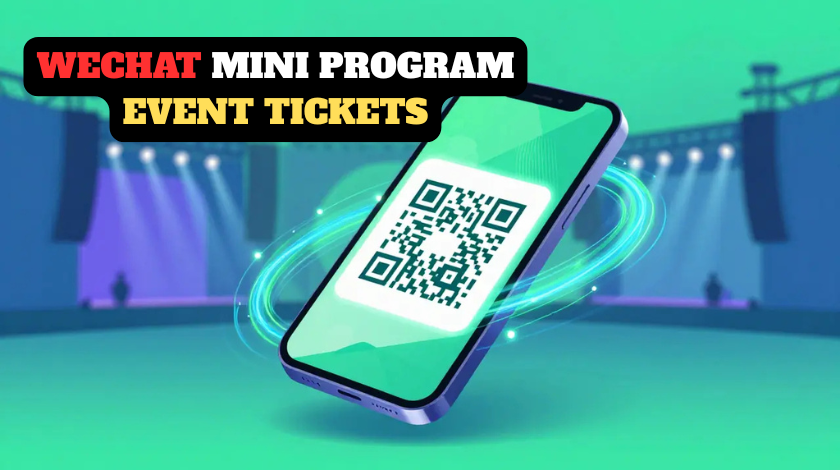
I still remember the first time I watched a concert organizer in Shanghai process over 5,000 attendees in under 30 minutes. There were no long queues, no printed tickets being waved around, and no stressed staff trying to verify handwritten lists. Instead, attendees simply pulled out their phones, opened a small app inside WeChat, displayed a QR code, and walked through the gates. That moment made me realize how fundamentally different event ticketing has become in the age of super apps.
If you have been organizing events for any length of time, you know the pain points of traditional ticketing systems. You deal with third-party platforms taking hefty commissions, attendees losing their email confirmations, long lines at entry because staff need to check paper lists, and limited access to your own customer data. WeChat mini program event tickets solve nearly all of these problems by bringing the entire ticketing experience inside an app that over a billion people already use daily.
What Exactly Are WeChat Mini Program Event Tickets?
Let me break this down in simple terms because the terminology can sound more complicated than it actually is. A WeChat mini program is essentially a lightweight application that runs inside WeChat itself. Users do not need to download anything from an app store or create new accounts. They simply tap a link or scan a QR code, and the ticketing interface opens instantly within their WeChat app.
When we talk about WeChat mini program event tickets, we are referring to a complete system where attendees can discover your event, browse ticket options, make payments, receive their digital tickets, and enter your venue, all without ever leaving WeChat. The ticket itself typically appears as a unique QR code stored inside the mini program, which staff can scan for instant validation at the door.
The beauty of this system lies in its integration. Because WeChat functions as what industry experts call a super app, it combines messaging, social networking, payments, and services in one place. Your attendees are already checking WeChat dozens of times per day to message friends, pay for groceries, or book rides. When your event ticketing lives inside that same environment, you eliminate the friction that normally causes people to abandon their purchase.
Why This Matters More Than Ever
I have spoken with dozens of event organizers over the past few years, and the same frustrations keep coming up. Traditional ticketing platforms often charge commissions ranging from ten to twenty percent per ticket sold. Worse, they keep the customer data, meaning you cannot build a direct relationship with the people attending your events. You are essentially renting your audience rather than owning it.
WeChat mini program ticketing flips this model entirely. When someone buys a ticket through your mini program, that relationship belongs to you. You have their contact information (with proper consent), can communicate with them directly via WeChat messages, and can invite them to future events without paying platform fees for repeat customers.
From my experience working with event teams in China and increasingly with international organizers targeting Chinese audiences, the conversion rate improvements are striking. One conference organizer I consulted with saw their ticket completion rate jump from 45% to 78% after switching from a traditional website checkout to a WeChat mini program. The difference was simple: users no longer had to leave their familiar environment, download anything new, or enter credit card details into an unfamiliar website. Their payment information was already saved in WeChat Pay.
How the Entire Process Works
Understanding the user journey helps explain why this system performs so well. Let me walk you through what actually happens when someone decides to attend your event.
The discovery phase usually begins organically. Someone sees your event mentioned in a WeChat group chat, spots a QR code on a coffee shop poster, or receives a link shared by a friend on their Moments feed. They tap the link, and within two seconds, your mini program opens. There is no loading screen asking them to download an app, no request to create a new account with a password they will forget, and no redirect to a mobile browser that feels clunky on their phone.
Once inside, they see your event details, perhaps watch a promotional video you have embedded, browse different ticket tiers like early bird or VIP options, and select what they want. The checkout process takes seconds because WeChat Pay is already integrated. They authorize the payment with their fingerprint or face recognition, and the ticket appears instantly in their mini program wallet.
On the day of the event, they simply open the same mini program, display the dynamic QR code, and your staff scans it with either a dedicated scanning device or another phone running the staff version of the mini program. The system validates the ticket in real time, marks it as used to prevent duplication, and logs the attendance data for your records.
The Real Benefits for Event Organizers
Let me be direct about what actually changes in your day-to-day operations when you adopt this system. First, your costs drop significantly. You are no longer printing physical tickets, paying for expensive scanning hardware, or hiring large teams to manage entry queues. Digital validation means one staff member with a phone can process hundreds of attendees per hour.
Second, you gain something invaluable: data. Traditional ticketing platforms guard attendee information like a trade secret. With your own mini program, you can see exactly who attended, when they arrived, which ticket tier they chose, and how they heard about your event. This information helps you make smarter decisions about pricing, marketing channels, and event scheduling for your next launch.
Third, the communication possibilities transform how you build relationships with your audience. Imagine being able to send a message directly to everyone who bought a ticket, reminding them about the event 2 days beforehand, updating them on schedule changes in real time, or sharing exclusive content after the event ends. Because these messages arrive in WeChat, they get opened at rates that would make email marketers jealous.
What Attendees Actually Experience
I think it is important to consider the attendee perspective because happy attendees become repeat customers. The feedback I consistently hear is that people love not having to manage yet another app on their already crowded phones. Their ticket lives inside WeChat, an app they trust and use constantly. They do not worry about losing an email confirmation or forgetting to print something at home.
The entry experience feels almost magical compared to traditional methods. No fumbling through email inboxes while holding up the line, no concerns about whether a screenshot will be accepted, no anxiety about whether they brought the right credit card for verification. They open WeChat, tap the mini program, show the code, and walk in. For younger attendees, especially, this is simply how they expect the world to work.
Security also improves despite the simpler experience. Because tickets are linked to verified WeChat accounts and phone numbers, the risk of scalping or fraudulent duplication drops dramatically. Advanced systems even use dynamic QR codes that refresh periodically, meaning a screenshot taken by someone else becomes useless within minutes.
Industries Already Winning With This Approach
While concerts and festivals were early adopters, the use cases have expanded enormously. Conference organizers love the ability to issue different ticket types for various sessions and track which workshops actually filled up. Museums and exhibitions use time-slot ticketing through mini programs to control crowd flow and prevent overcrowding in galleries.
Sports venues have found particular success with season pass management, where a single digital ticket in a fan’s WeChat wallet grants access to multiple games throughout the year. Even smaller community events like weekend markets or local theater productions benefit, as the barrier to setting up ticketing becomes so low.
International businesses targeting Chinese travelers have also embraced this technology. A tourism operator in Thailand, for example, can offer Mandarin-language ticket booking through a WeChat mini program, accepting payment in Chinese currency while delivering QR codes that work at their physical location overseas.
Getting Started: Practical Considerations
If you are convinced this approach makes sense for your events, you face a choice between building a custom mini program or using an existing platform solution. Custom development gives you complete control over branding, features, and data ownership. It makes sense if you run frequent large events or need deep integration with your existing customer relationship management systems.
Platform solutions, where you essentially rent space in an existing ticketing mini-program, offer faster launch times and lower upfront costs. For organizers running occasional events or testing the market, this can be the smarter entry point. Many platforms provide ready-made templates, built-in marketing tools, and customer support that handles technical issues for you.
Regardless of which path you choose, certain fundamentals remain important. Your mini program must load quickly, work smoothly on older phones, and include customer support channels within the interface. The design should feel native to WeChat rather than like a website crammed into a small screen. Testing with real users before your official launch will reveal friction points you might not notice on your own.
Marketing Within the WeChat Ecosystem
One aspect that surprises many first-time users is how naturally mini program ticketing integrates with marketing. Because WeChat is fundamentally a social platform, your event can spread through organic sharing in ways that traditional ticketing websites struggle to match.
Attendees can share your event page directly to group chats with friends who might be interested. They can post about their ticket purchase on Moments, creating social proof that drives further interest. You can place QR codes on physical posters that, when scanned, open your ticketing mini program instantly. You can even run targeted advertising through WeChat Moments that links directly to your ticket purchase flow.
The referral possibilities extend further with built-in incentive systems. Some organizers offer discounts or exclusive perks to attendees who successfully invite friends to purchase tickets. Because the entire process from invitation to purchase happens within WeChat, tracking these referrals becomes straightforward.
Security and Compliance Considerations
Operating within WeChat’s ecosystem means adhering to platform policies that evolve over time. You need to ensure your mini program complies with content regulations, payment processing standards, and data privacy requirements. The approval process for launching a mini program involves review by Tencent, and understanding these requirements upfront prevents delays.
For events requiring identity verification, such as age-restricted concerts or professional conferences, the mini program can integrate with real-name authentication systems. This adds a layer of security while maintaining the seamless user experience that makes mini programs attractive.
The Future Is Already Here
Looking ahead, the capabilities of WeChat mini-program ticketing continue to expand. Some systems now incorporate artificial intelligence to recommend events based on a user’s past attendance and interests. Others are experimenting with augmented reality features that help attendees navigate large venues or find their seats.
The fundamental shift, however, is already complete. The era of treating ticketing as a separate transaction requiring multiple apps, websites, and physical documents is ending. For Chinese audiences and, increasingly, for international events targeting Chinese travelers, WeChat mini-program ticketing represents the new standard.
What strikes me most after years of watching this ecosystem evolve is how invisible the technology becomes. When done well, attendees do not even think about the mini program. They think about the event itself, about sharing the experience with friends, about the memories they will create. The ticketing system simply facilitates that experience without adding friction or stress. And for event organizers, that is exactly how it should be.
Conclusion
WeChat mini program event tickets represent more than a technological upgrade; they signal a fundamental change in how events connect with audiences. By bringing discovery, purchase, and entry into a single ecosystem that users already trust and use daily, organizers eliminate the friction that traditionally kills ticket sales and damages event experiences.
The benefits extend across every stakeholder. Organizers gain cost savings, data ownership, and direct communication channels. Attendees enjoy convenience, security, and seamless entry. The entire event industry is moving toward a model in which technology supports human connection rather than complicates it.
For anyone organizing events in 2026, understanding and potentially adopting WeChat mini program ticketing is not just a competitive advantage. It is becoming a baseline expectation from audiences who have experienced how smooth event access can be when done right.
Frequently Asked Questions
Do attendees need to download a separate app to use WeChat mini program ticketing?
No, that is one of the primary advantages. Mini programs open instantly within WeChat without any download or installation required. Users simply tap a link or scan a QR code, and the ticketing interface appears immediately.
Is WeChat Pay the only payment option available?
Within the WeChat ecosystem, WeChat Pay is the primary and most seamless payment method. However, some mini programs also integrate other payment options for international users or specific use cases, though WeChat Pay offers the smoothest experience for the majority of Chinese users.
Can tickets be transferred to friends if someone cannot attend?
Yes, most WeChat mini program ticketing systems include transfer functionality. The original ticket holder can send the ticket to a friend’s WeChat account, and the system updates the ownership records accordingly. This prevents the fraud risks associated with screenshot sharing or email forwarding.
What happens if someone’s phone battery dies before they reach the venue entrance?
This is a common concern, and professional organizers prepare for it. Most systems allow staff to look up tickets using the attendee’s phone number or, as a backup, their WeChat ID. Some venues also offer charging stations near entry points to minimize this issue.
Are mini program tickets secure against duplication or fraud?
Generally, yes. Advanced systems use dynamic QR codes that refresh periodically, account linking that prevents unauthorized transfers, and real-time validation that marks tickets as used immediately upon first scan. These features make fraud significantly more difficult than with traditional paper tickets or static PDF files.
Can international event organizers use WeChat mini program ticketing for overseas events?
Absolutely. Many international venues, particularly those targeting Chinese tourists or business travelers, have successfully implemented WeChat mini program ticketing. The system works globally as long as attendees have WeChat installed and internet connectivity for the initial ticket retrieval.