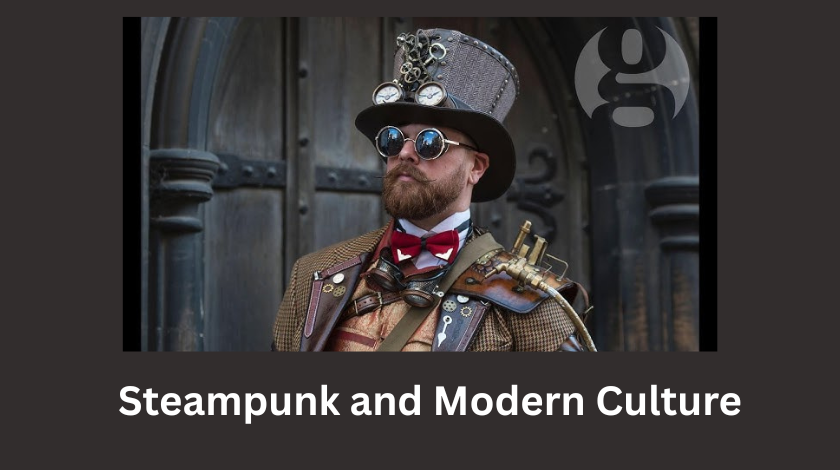
If you have ever seen someone walking down the street wearing a Victorian waistcoat, a leather top hat, and a pair of brass goggles encrusted with gears, you have caught a glimpse of the steampunk world. For the uninitiated, it looks like a strange costume party that never ended. But for those of us who have spent years scouring thrift stores for the perfect antique clock parts or spent hours painting a plastic Nerf gun to look like weathered copper, steampunk is more than just a look. It is a philosophy, a creative outlet, and a way of reimagining the past through the lens of a future that never was.
The core of steampunk lies in the marriage of the Victorian era’s elegance with the gritty, greasy world of the Industrial Revolution. It asks a simple but fascinating question: What would the world look like if we had never moved past steam power, but we still managed to invent computers, airships, and advanced robotics? The result is a beautiful, clunky, and highly detailed aesthetic that has permeated fashion, home decor, and even literature. In this article, I want to take you through the various branches of this subculture and explain why it continues to capture the imagination of people all over the world.
The Historical Foundation: Steampunk and the Victorian Era
To understand steampunk, you first have to understand the era that inspired it. The 19th century was a time of immense change. It was the age of Queen Victoria, the expansion of the British Empire, and the birth of the machine age. People were obsessed with progress, but they still valued craftsmanship and ornate beauty. This is where the “Steam” comes from. In the steampunk universe, the digital revolution never happened. Instead, everything is powered by pistons, valves, and pressurized steam.
The “Punk” part is equally important. In any “punk” subculture, there is an element of rebellion. In steampunk, this rebellion is often directed against the modern, disposable nature of our current technology. We live in a world of sleek, white, plastic smartphones that are designed to break in two years. Steampunk rebels against this by celebrating objects that look like they were built to last a century. It values the visible mechanics of a machine. Instead of hiding the motherboard behind a screen, steampunk puts the gears on the outside for everyone to see. It is about taking back control of technology and making it something tactile and understandable.
Steampunk and Fashion: More Than Just Corsets
When most people think of steampunk, they think of the clothes. Steampunk fashion is a wonderful blend of strict Victorian social norms and wild, adventurous functionality. For men, this often means three-piece suits, pocket watches, and long trench coats. For women, it usually involves corsets, bustles, and layered skirts. However, you don’t just wear these items as they were in the 1800s. You “punk” them up. You might wear a leather harness over your corset to hold your “ray gun,” or you might attach a brass mechanical arm to your shoulder.
I remember my first time attending a steampunk convention. I was struck by how much thought goes into the materials. You rarely see bright, neon colors. Instead, the palette is dominated by “earthy” tones like brown, tan, burgundy, and forest green. The fabrics are heavy and textured: wool, leather, lace, and velvet. The accessories are what truly make the outfit. Goggles are the unofficial symbol of the movement, representing the need for protection while flying an airship or working in a laboratory. Even if you aren’t an airship captain, wearing those goggles on your hat signals that you belong to this community of makers and dreamers.
Steampunk and Interior Design: Creating a Retro-Futuristic Sanctuary
You don’t have to dress up to enjoy the steampunk aesthetic. In recent years, steampunk and interior design have become a major trend for people who want a home that feels warm, intellectual, and a bit mysterious. A steampunk room looks like a cross between a 19th-century explorer’s study and a mad scientist’s workshop. It’s a very masculine but cozy style that relies heavily on “industrial” elements.
If you want to bring this into your own home, you start with materials like dark wood and exposed brick. Lighting is perhaps the most important element. Modern LED bulbs are often too harsh and blue. Steampunk enthusiasts prefer Edison bulbs, which have those beautiful, glowing orange filaments. You can also incorporate “found objects.” I once saw a coffee table made from an old factory cart and a bookshelf held up by black iron water pipes. It’s about celebrating the raw materials of the world. It’s not just a room; it’s a story. Every object looks like it has a history, like it was salvaged from some forgotten laboratory in London or Paris.
Steampunk and Literature: The Origin of the Dream
The roots of this movement are found in the pages of books. Long before the term “steampunk” was coined in the 1980s, authors like Jules Verne and H.G. Wells were writing about these themes. In Twenty Thousand Leagues Under the Sea, Verne gave us the Nautilus, a submarine that was far more advanced than anything that existed at the time, yet it was filled with Victorian luxuries like a grand piano and a library. This is the essence of steampunk: high technology wrapped in old-world charm.
In modern literature, the genre has expanded significantly. Books like The Difference Engine by William Gibson and Bruce Sterling explore an alternate history where Charles Babbage actually finished his mechanical computer. Then you have the more whimsical side, like Howl’s Moving Castle, where magic and steam-powered castles coexist. As a reader, steampunk literature offers a sense of wonder that is often missing from “hard” science fiction. In hard sci-fi, everything is explained by physics and cold logic. In steampunk, there is room for “aether,” mad science, and the feeling that anything is possible if you just have enough steam pressure and a big enough wrench.
The Great Debate: Steampunk and Cyberpunk
A question I often get asked is, “What is the difference between steampunk and cyberpunk?” It’s a fair question because they share the “punk” suffix, but they are polar opposites in terms of vibe. Cyberpunk is “High Tech, Low Life.” It is set in a neon-soaked future where mega-corporations rule, the planet is dying, and everyone has computer chips in their brains. It is often cynical and dark.
Steampunk, on the other hand, is generally much more optimistic. It is “Low Tech, High Life.” Even though it deals with the smog and grit of the industrial age, there is a sense of adventure and discovery. It feels like a world where an individual with a good idea and a set of tools can change the course of history. While cyberpunk asks, “How will technology destroy our humanity?” steampunk asks, “How can we make technology more human?” This distinction is why steampunk often feels more “cozy” and accessible to a wider range of people.
Steampunk and the DIY Maker Culture
The heart and soul of the steampunk community is the DIY (Do It Yourself) movement. Because you can’t exactly go to a big-box store and buy a “steam-powered jetpack,” you have to build it yourself. This has turned the steampunk community into a massive network of makers, engineers, and artists. There is a specific pride in taking something modern and “steampunking” it.
I have a friend who took an old, broken 1920s typewriter and modified it so that it could plug into a modern computer via USB. He didn’t just want a keyboard; he wanted the tactile click and the smell of old metal while he wrote his emails. That is the steampunk spirit. It’s about craftsmanship. If you want to get started with steampunk DIY, you don’t need a massive workshop. You just need some metallic spray paint (copper and brass are your best friends), some super glue, and a bag of miscellaneous gears you can find online. It encourages people to look at trash and see potential. An old vacuum cleaner part can become a gauntlet; a broken clock can become a piece of jewelry. This focus on upcycling makes steampunk one of the most eco-friendly subcultures out there.
Why Steampunk Matters: My Personal Perspective
I believe steampunk has remained popular because it fulfills a deep human need for “enchantment.” We live in a world that is very streamlined and efficient. Our cars look like jellybeans, and our buildings are glass boxes. Everything is designed to be invisible and “user-friendly.” But there is something lost when we don’t understand how our world works.
Steampunk brings back the mystery. It reminds us of a time when the world was still being mapped, when there were still “monsters” in the deep ocean and “unexplored” lands. When you put on a steampunk outfit or decorate your office with brass instruments, you are tapping into that spirit of exploration. You are saying that you still believe in adventure. In my opinion, it’s a way to keep the child-like wonder alive in an adult world. It’s not just about the gears; it’s about the fact that those gears are turning to power a dream.
The community itself is also incredibly inclusive. Because the world is “alternate history,” you can be whoever you want. You can be a Victorian lady who is also a master mechanic, or a sky pirate from a country that never existed. There are no rules, only guidelines. This freedom of expression is why you see people of all ages and backgrounds at steampunk events. It is a shared love for the “what if” of history.
Conclusion
Steampunk is a vast and winding world that offers something for everyone. Whether you are interested in the high fashion of the Victorian era, the gritty mechanical world of the Industrial Revolution, or the imaginative tales of airships and time machines, there is a place for you here. It is a subculture that celebrates the “maker” in all of us and encourages us to look at the past not as a dusty museum, but as a playground for the future.
By blending the old with the new, steampunk creates a unique space where creativity knows no bounds. It teaches us to appreciate the beauty in the machine and the elegance in the everyday. So, the next time you see a stray gear on the ground or an old brass lamp in a thrift store, don’t just see it as junk. See it as the first piece of your own steampunk adventure.
Frequently Asked Questions (FAQ)
1. Do I have to be an engineer to enjoy steampunk?
Absolutely not! While many people in the community enjoy building mechanical props, the majority are just fans of the aesthetic, the literature, or the fashion. You can enjoy steampunk simply by reading a book or wearing a cool pair of earrings.
2. Is steampunk expensive?
It can be, but it doesn’t have to be. While high-end leather corsets and custom brass props are pricey, the DIY spirit of steampunk means you can make incredible things out of thrift store finds and cheap materials like foam and paint.
3. What are the best steampunk movies for beginners?
I always recommend The Rocketeer for a “dieselpunk” feel, or The League of Extraordinary Gentlemen for classic steampunk vibes. If you like animation, Castle in the Sky or Steamboy are must-watches.
4. Is steampunk just for British people?
Not at all! While it draws heavily from Victorian England, there are steampunk movements all over the world, including “Western Steampunk” (set in the American frontier) and “Silkpunk” (which uses East Asian historical influences).
5. Can I wear steampunk clothes in everyday life?
Sure! Many people use “subtle steampunk” elements, like wearing a waistcoat or using a pocket watch, without going full “airship captain” for a trip to the grocery store.