If you close your eyes and imagine the perfect steak dinner, what do you see? Maybe you picture a dimly lit restaurant with white tablecloths. You can hear the faint clinking of silverware and the murmur of quiet conversation. Then, the waiter places a plate in front of you. You hear that gentle sizzle, and the smell hits you immediately. It is a mix of roasted beef, nutty browned butter, and aromatic garlic. You pick up your knife, and it slides through the meat with barely any resistance. This is the sensory experience we all chase when we crave red meat.
However, when you look at the menu or stand in front of the butcher counter, that excitement can quickly turn into confusion. You see names you know like Sirloin or Filet Mignon. But then you see it. The “Delmonico Steak.”
What exactly is it? Is it a specific part of the cow? Is it just a fancy name for a ribeye? Or is it something else entirely? I have spent years grilling in my backyard and eating at steakhouses across the country, and I can tell you that the Delmonico is the most misunderstood item in the meat case. But do not worry. It is not just a cut of meat; it is a style and a legacy. By the time you finish reading this, you will know exactly what it is, how to buy it, and most importantly, how to cook it so well that your friends will think you went to culinary school.
2. Unraveling the Mystery: What is a Delmonico Steak?
To understand this steak, we have to take a little trip back in time. We are going to New York City in the mid-19th century. The year is roughly 1837. This was the era of Delmonico’s Restaurant. It was widely considered the first fine dining restaurant in the United States. Before Delmonico’s, people mostly ate at inns or taverns where the food was basic and purely for fuel. Delmonico’s changed everything. They introduced a menu, a wine list, and separate tables.
Their signature dish was the Delmonico Steak. It became famous instantly. However, here is where the mystery begins. Back in the 1800s, there was no standardized way to butcher a cow. The beef industry was different then. Because of this, historians and chefs have argued for decades about exactly which muscle the original chef used.
Some hardcore historians claim the original cut was from the top sirloin. Others argue it was the first cut of the “chuck eye,” which sits right next to the rib section. But culinary language evolves over time. If you walk into a high-end steakhouse or a quality butcher shop today and ask for a Delmonico, you are not going to get a sirloin.
In the modern world, the current definition of a Delmonico steak is widely accepted as a premium, boneless ribeye. But it is not just any ribeye. It typically refers to the very best center cuts, sliced thick. It represents the pinnacle of quality. So, while the history is a bit foggy, the result on your plate today is very clear. It is a piece of beef designed for richness and tenderness.
3. Delmonico vs. Ribeye: Spotting the Difference
This is the most common question I get asked when I am cooking for friends. “Wait, so is a Delmonico just a ribeye?”
The answer is yes and no. Think of it like this: all Ferraris are cars, but not all cars are Ferraris. In the same way, modern Delmonico steaks are almost always ribeyes, but not every ribeye deserves to be called a Delmonico.
Let us look at the anatomy. The ribeye comes from the rib primal of the cow, specifically ribs six through twelve. This area doesn’t do much heavy lifting, so the muscle stays soft and gathers lots of intramuscular fat.
A standard ribeye steak might be cut thin, maybe less than an inch. It might have the large piece of fat (the kernel) in the middle that is hard to eat. It might even have the bone attached. You have probably seen “Tomahawk” steaks or “Cowboy” steaks; those are bone-in ribeyes.
A Delmonico is different because of its refinement. First, it is always boneless. You are paying for meat, not bone. Second, the quality of the trim is better. A butcher preparing a Delmonico will trim away the hard outer fat and the gristle, leaving you with just the beautiful, edible meat. Finally, and most importantly, there is the thickness. A true Delmonico is cut thick, usually at least an inch and a half to two inches. This thickness is crucial for the cooking process, which we will discuss later. So, while they come from the same neighborhood on the cow, the Delmonico is the one that lives in the penthouse.
4. How to Select the Perfect Cut at the Butcher
Buying a steak should be an interactive experience. I used to be shy about talking to the person behind the counter, but I learned that the butcher is your best friend. They want you to have a good meal so that you come back and buy more meat.
When you go to the store to buy a Delmonico, do not just grab the Styrofoam tray wrapped in plastic if you can avoid it. Go to the service counter. Here are the personal tips I use to pick the winner.
First, look at the color. You want a bright, vibrant cherry-red color. If the meat looks dark maroon, brown, or gray, it has been sitting there too long or it was not stored correctly.
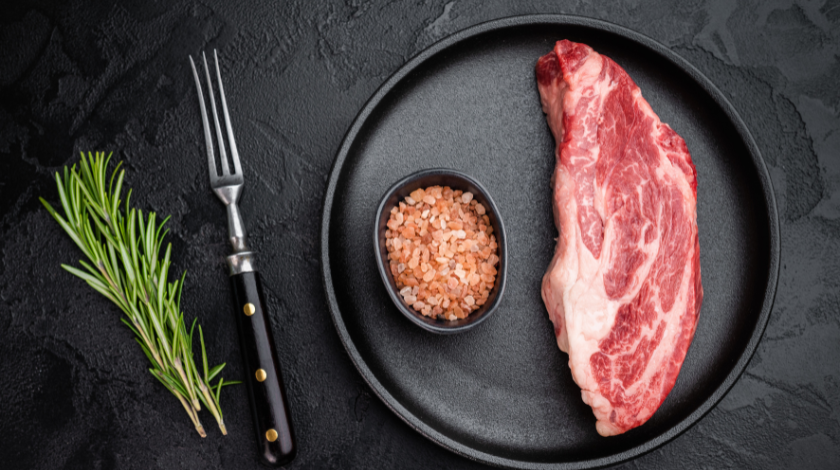
Second, and this is the holy grail of steak selection, look at the marbling. Marbling is the white flecks of fat inside the muscle, not the thick rim of fat on the outside. You want the steak to look like it has a shattered spiderweb of white lines running all through it. This fat is flavor. As the steak cooks, that internal fat melts (renders) and bastes the meat from the inside. This is what makes the steak juicy. If the red meat is totally solid with no white specks, it will be dry and tough, no matter how perfectly you cook it.
Finally, check the thickness. Ask the butcher to cut it for you if you don’t see one thick enough. Tell them, “I need a center-cut boneless ribeye, about two inches thick.” They will know exactly what you are doing.
You also need to understand grades. In the US, you generally see “Select,” “Choice,” and “Prime.” “Select” is the lowest grade you find in supermarkets; it has very little fat. Avoid this for a special dinner. “Choice” is great and readily available. “Prime” is the top tier with the most fat, but it is expensive. For a Delmonico, try to get at least “Choice,” but if you want to treat yourself, “Prime” is an unforgettable experience.
5. The Best Method to Cook a Delmonico Steak (Pan-Sear to Oven)
Now we get to the fun part. Cooking. Many people think the grill is the only place for a steak, but for a fatty cut like a Delmonico, I actually prefer a cast iron skillet. The skillet allows the steak to cook in its own fat, creating a better crust than a grill grate can.
Preparation
The biggest mistake home cooks make is taking the steak out of the fridge and throwing it immediately into a hot pan. Do not do this. You need to take the steak out about 45 minutes to an hour before you plan to cook. Let it sit on the counter. This brings the internal temperature up, which helps it cook evenly. If the center is ice cold, the outside will burn before the inside is done.
While it is sitting there, take a paper towel and pat every side of the steak dry. I mean bone-dry. If the surface is wet, the water has to evaporate before the meat can brown. This creates steam, and steamed meat is gray and sad. You want a crust.
Seasoning
Keep it simple. You have bought a high-quality piece of beef; you want to taste the beef, not a taco seasoning packet. Use coarse kosher salt and freshly cracked black pepper. Season it heavily. Remember, the steak is thick. The seasoning on the outside has to flavor all that meat on the inside. Do not be shy with the salt.
The Cast Iron Method
Turn your stove on high and place your cast iron skillet on the burner. Let it get hot. You want it smoking slightly. Add a high-heat oil like avocado oil or grape seed oil. Do not use extra virgin olive oil because it will burn and taste bitter.
Carefully lay the steak into the pan. Lay it away from you so the oil doesn’t splash on your hands. Now, you need to exercise patience. Do not touch it. Do not wiggle it. Let it sear hard for about 3 to 4 minutes. You are looking for the Maillard reaction, which is the scientific name for that delicious brown crust. Flip it over. It should look dark brown and crispy. Cook the other side for another 3 minutes.
Butter Basting
This is the chef’s secret. When the steak is mostly seared, turn the heat down to medium. Drop in two or three tablespoons of unsalted butter, three smashed cloves of garlic, and a sprig of rosemary or thyme. The butter will melt and start to foam. Tilt the pan slightly so the butter pools at the bottom. Take a large spoon and scoop that hot, garlic-infused foaming butter over the steak repeatedly. This adds a nutty richness that you simply cannot get on a grill.
6. Determining Doneness and Resting
How do you know when it is done? Please, I beg you, do not cut into it to check. If you cut it while it is hot, all the juices will run out onto the board, and your steak will be dry.
Some people use the “finger test” where you poke your hand, but that is not accurate. The only way to be sure is to use a digital instant-read thermometer. It is a cheap tool that will save you hundreds of dollars in ruined meat.
For a Delmonico, which has a lot of fat, I recommend a medium-rare to medium finish. You need enough heat to melt that fat.
- Rare: 120-125°F (Cool red center)
- Medium-Rare: 130-135°F (Warm red center)
- Medium: 140-145°F (Warm pink center)
Here is the trick: “Carryover Cooking.” When you take the steak out of the pan, it keeps cooking. The temperature will rise about 5 to 7 degrees while it sits on the plate. So, if you want a final temperature of 135°F (perfect medium-rare), you actually need to take the steak out of the pan when the thermometer reads 128°F or 130°F.
Resting
Once the steak is out of the pan, put it on a warm plate or cutting board and wait. Set a timer for 10 minutes. Do not touch it. During the cooking process, the muscle fibers contract and squeeze the juices to the center of the steak. If you cut it now, they spill out. By resting the meat, the fibers relax, and the juices redistribute back through the whole steak. This ensures that the first bite is just as juicy as the last bite.
7. Serving Suggestions and Pairings
You have cooked a masterpiece, so you need sides that can stand up to it. A Delmonico is rich and heavy, so you have two options for sides: something to cut the richness or something to embrace it.
If you want to embrace the classic steakhouse vibe, you cannot go wrong with potatoes. A baked potato with sour cream and chives is traditional. My personal favorite is potatoes au gratin—sliced potatoes baked in cheese and cream. The creamy texture matches the tender steak perfectly.
Vegetables are important too. Creamed spinach is the most famous pairing for a Delmonico. The bitterness of the spinach balances the fat of the beef. If you want something lighter, grilled asparagus with lemon juice works wonders. The acid in the lemon helps cleanse your palate between bites of fatty beef.
For drinks, red wine is the standard. You want a wine with “tannins.” Tannins dry out your mouth slightly, which is perfect when you are eating a juicy steak. A Cabernet Sauvignon from Napa Valley or a Malbec from Argentina are excellent choices. If you are a beer drinker, a dark porter or stout goes very well with the charred crust of the steak.
8. Conclusion
The Delmonico steak is more than just dinner; it is an experience. It connects us to the history of old New York and the tradition of American fine dining. While the definitions have changed over the last 150 years, the spirit of the Delmonico remains the same: it is a celebration of the best quality beef you can find.
I hope this guide has removed the intimidation factor for you. The next time you are at the butcher shop, look for that thick, well-marbled ribeye. Take it home, season it simply, sear it in cast iron, and baste it with butter. It requires a little bit of attention and care, but the reward is incredible. Cooking a steak like this at home is not only cheaper than a restaurant, but it also tastes better because you put your own effort into it. So, fire up the stove, pour a glass of wine, and enjoy one of the greatest meals known to man.
9. FAQs
Q1: Can I cook a Delmonico steak on a gas grill?
Yes, absolutely. While I prefer the cast iron pan for the crust, a gas grill works well too. Just make sure you get the grill very hot (500°F+) before putting the meat on. Because the Delmonico has a lot of fat, be careful of flare-ups. When the fat drips onto the burners, it can cause flames to shoot up and burn the meat. Keep an eye on it.
Q2: Is a Delmonico steak expensive?
It is usually on the higher end of the price scale. Because it is a premium cut (typically ribeye) and requires a good amount of trimming and marbling, it costs more than a sirloin or chuck roast. However, it is usually cheaper than a Filet Mignon.
Q3: My steak turned out gray on the outside. What happened?
This usually happens because the steak was wet when you put it in the pan, or the pan wasn’t hot enough. Remember to pat the steak completely dry with paper towels before cooking. Also, wait until your oil is shimmering and starting to smoke slightly before adding the meat.
Q4: Should I marinate a Delmonico steak?
No, I would strongly advise against it. Marinades are great for tough cuts of meat like flank steak or skirt steak because they help break down fibers. A Delmonico is already tender and flavorful. If you marinate it, you mask the natural taste of the premium beef. Salt and pepper are all you need.
Q5: How do I slice the steak for serving?
Always slice “against the grain.” Look at the direction the muscle fibers are running, and cut perpendicular to them. This shortens the fibers and makes each bite more tender to chew. For a thick Delmonico, I like to slice it into half-inch strips and fan them out on the plate.