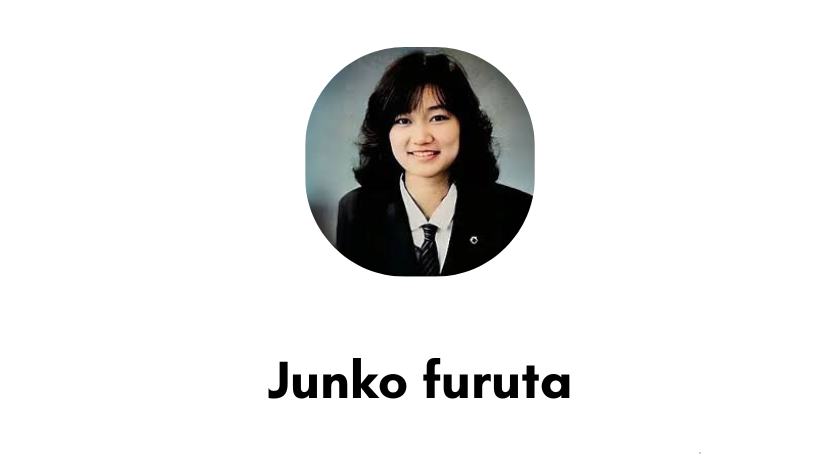
When people think about Japan, they usually think about neon lights, incredible food, and a society that feels incredibly safe. I have always admired the low crime rates and the polite culture there. However, every society has its dark shadows, and if you dig deep into the history of Japanese true crime, you will eventually find a case that shatters your heart completely. It is the story of Junko Furuta. This is not just a story about a crime. It is a story about the failure of humanity, the failure of the law, and the tragic loss of a beautiful young life. Writing about this is difficult because the details are so painful, but I believe it is important to tell her story so that the world never forgets her name. We must look at what happened not to revel in the horror, but to understand how a system designed to protect children ended up protecting monsters instead.
Who Was Junko Furuta?
Before we talk about the darkness, we have to talk about the light. Junko Furuta was a normal, happy 17-year-old high school student living in Misato, Saitama Prefecture. By all accounts, she was a lovely girl who had a bright future ahead of her. She was popular with her classmates and was known for being kind and responsible. She had a part-time job, she studied hard, and she lived a life that was relatable to almost anyone who has ever been a teenager.
It is vital that we focus on who she was as a person because true crime often reduces victims to just statistics or objects of pity. Junko was a daughter and a friend. She had favorite songs, she had crushes, and she had dreams of what she wanted to be when she grew up. When she left school on that evening in November 1988, she had no idea that she was walking into a trap that would end her life. Remembering her humanity is the only way we can truly respect her memory.
The Night Everything Changed
The nightmare began on November 25, 1988. Junko was cycling home from her part-time job. It was a routine she likely did many times before. A boy named Hiroshi Miyano, who was involved with local gangs and had a bad reputation, had spotted her. Along with his friend, Nobuharu Minato, they orchestrated a plan. Minato kicked her off her bicycle, and when she fell, Miyano pretended to be a helpful bystander. He offered to walk her home. It was a twisted manipulation that preyed on her trust.
Once he led her away to a quiet area, he revealed his true nature. They threatened her, claiming they had Yakuza connections and would hurt her family if she did not comply. This is a terrifying aspect of the case that often gets overlooked. The psychological terror was just as heavy as the physical threat. For a young girl in the 1980s, the threat of the Yakuza was incredibly effective. She went with them not because she was weak, but because she was trying to protect her loved ones. They took her to a house in the Adachi ward of Tokyo, which belonged to the parents of one of the boys. That house would become her prison for the next 44 days.
![Image Idea: A grainy, black and white photo of a 1980s Japanese suburban street at dusk, evoking a sense of loneliness and foreboding.]
The Perpetrators: Boys or Monsters?
The group responsible for this crime consisted of four main teenage boys, but many others drifted in and out of the house. The leader was Hiroshi Miyano. He was a small guy, but he had a Napoleon complex and a desperate need to feel powerful. He changed his name later in life, but at the time, he was the driving force behind the cruelty. Then there was Jo Ogura, who was physically stronger and acted as the muscle. Nobuharu Minato was the one who provided the house. Finally, there was Yasutoshi Watanabe.
What makes this situation so infuriating to read about is the group psychology. Alone, perhaps none of these boys would have committed a crime of this magnitude. But together, they fed off each other’s violent energy. They created a micro-society inside that house where normal moral rules did not apply. They were all under the age of 18. In the eyes of the law, they were children. But their actions were far beyond the capability of what we consider a child. They acted with the cruelty of hardened sadists. They laughed, they ate, and they watched TV, all while keeping a girl captive in the upstairs room. It shows a complete lack of empathy that is frankly terrifying to think about.
The Silence of the House
One of the most baffling parts of this case is the location. This did not happen in a dungeon or a cabin in the woods. It happened in a two-story house in a residential neighborhood. Nobuharu Minato’s parents lived in that house. They were home during much of the captivity. You might wonder how they could allow this to happen. Reports suggest that the boys intimidated the parents, or that the parents simply chose to turn a blind eye because they didn’t want trouble.
This is a massive failure of adult responsibility. Imagine knowing that a girl is being held against her will in your own home and doing nothing. They even answered the phone when Junko’s desperate parents called around looking for her. The boys forced Junko to call her parents and say she was staying with a friend and not to look for her. The police, hearing this, treated it as a runaway case rather than a kidnapping. This series of missed opportunities is heartbreaking. If just one person—a parent, a neighbor who heard screams, or a police officer—had looked a little closer, Junko might still be alive today.
The Failure of the System
The Japanese police force is generally very efficient, but in 1988, their handling of this case was flawed. Because Junko was a teenager, the assumption was that she had run away. There was a bias against investigating too deeply into “troubled youth” cases. Furthermore, the boys terrified the neighbors. They bragged about their connections to the Yakuza. In Japan, the harmony of the community is very important, and people are often discouraged from sticking their noses into other people’s business. This cultural trait, usually known as “meiwaku” (not causing trouble for others), backfired in the worst way possible. The neighbors prioritized their own peace and quiet over the safety of a screaming girl.
The fear of the Yakuza was a powerful tool. Even if the boys weren’t high-ranking gangsters, the mere mention of the word was enough to silence the community. It creates a feeling of helplessness. It makes you realize that safety is fragile. When bad people organize and threaten violence, the structures of society that are supposed to protect us can crumble very quickly.
The Controversial Sentencing
After 44 days of unimaginable suffering, Junko passed away. The boys disposed of her body in a concrete drum and dumped it in reclaimed land in Koto Ward. When they were finally caught, the Japanese public expected swift and harsh justice. However, they were met with the reality of the Japanese Juvenile Law. Because the perpetrators were minors, their names were withheld from the media (though magazines like Shukan Bunshun famously leaked them later).
The court system focused on rehabilitation rather than punishment. The sentences they received were shockingly light compared to the severity of the crime. The leader received 20 years. The others received even less, ranging from 5 to 10 years or indeterminate sentences. To the public, and especially to Junko’s grieving family, this felt like a slap in the face. How can you rehabilitate someone who tortured another human being for over a month? The law seemed to care more about the future of the killers than the life they had stolen. This case sparked a massive debate in Japan about lowering the age of criminal responsibility and increasing penalties for juvenile offenders. It is a debate that continues to this day whenever a young person commits a violent crime.
![Image Idea: A gavel resting on a table with a blurred background of a Japanese courtroom sketch, representing the legal conflict.]
Where Are They Now?
This is the part that makes my blood boil, and I am sure it will make you angry too. All four of the main perpetrators were eventually released from prison. They were given a second chance at life—a chance Junko never got. You would hope that after serving time, they would live quiet lives of repentance. Unfortunately, that does not seem to be the case for all of them.
Internet detectives and journalists have tracked them over the years. Shinji Minato (formerly Nobuharu Minato) was actually re-arrested in 2018 for an attempted murder related to a road rage incident. He beat a man with a metal rod. This proves that for some people, prison does not work. The evil is deep-rooted. It validates the fears of everyone who said they should never have been released.
Hiroshi Miyano is rumored to have changed his name and moved around, engaging in various scams. Jo Ogura was also rumored to be involved in the dark underbelly of society. It is a terrifying thought that you could be walking down the street in Japan and pass by one of the men responsible for the most horrific crime in the country’s history, and you wouldn’t even know it. They are free men. They can eat, sleep, and breathe, while Junko’s family has been left with a void that can never be filled.
Reflecting on the Legacy
The case of the “Concrete-encased high school girl murder” has left a permanent scar on the Japanese psyche. It ended the innocence of the 1980s bubble era. It showed that monsters could look like normal high school boys. It forced the country to look in the mirror and ask hard questions about how they raise their sons, how they police their streets, and how they protect their daughters.
There have been movies and manga made about this case, though many people feel they are in poor taste. Using such a tragedy for entertainment feels wrong. However, if we tell the story for the purpose of education and remembrance, it has value. The value lies in the lesson: We must speak up. We cannot let fear silence us when we see something wrong. We cannot let laws protect the guilty at the expense of the innocent.
Conclusion
Writing this article was an emotional journey. It is hard to look into the abyss of human cruelty. But we do it for Junko. We do it to ensure that the narrative isn’t just about what happened to her body, but about the failure of the world around her. Junko Furuta deserved to grow up. She deserved to fall in love, to travel, to have a career, and to grow old. That was stolen by four boys and enabled by a silent society.
As we move forward, we should carry her memory as a reminder to be vigilant. If you see something, say something. If you hear a scream, call the police. Do not assume someone else will do it. Do not let “not causing trouble” stop you from saving a life. Justice failed Junko Furuta in 1989, but by remembering her and refusing to let her story fade into obscurity, we give her the dignity she was denied in her final days.
Frequently Asked Questions (FAQ)
1. What exactly is the “Concrete-encased high school girl murder case”?
This is the media name given to the abduction and murder of Junko Furuta in 1988. It refers to the method the perpetrators used to dispose of her body, which was found in a drum filled with concrete in Koto Ward, Tokyo.
2. Why were the sentences for the killers so light?
The killers were all under the age of 18 at the time of the crime. Under Japanese Juvenile Law, the focus is on rehabilitation rather than punishment. The court system avoids giving the death penalty or life imprisonment to minors, which led to sentences ranging from roughly 5 to 20 years.
3. Are the killers still in prison today?
No, all four of the main perpetrators have been released. They served their time and were released back into society. However, one of them, Shinji Minato, was re-arrested in 2018 for a violent assault, raising questions about the effectiveness of their rehabilitation.
4. Did the parents of the perpetrators know what was happening?
It is widely reported that the parents of the boy whose house was used (Minato) were aware that a girl was in the house. However, they did not intervene, allegedly due to fear of the ringleader, Hiroshi Miyano, and his threats of violence against them.
5. How did the police fail in this case?
The police initially treated Junko’s disappearance as a runaway case rather than an abduction. When the perpetrators forced Junko to call home to say she was safe, the police lowered the priority of the investigation. Furthermore, officers allegedly dismissed reports from neighbors about screams coming from the house.
6. Has the law changed since this case?
Yes, the public outrage surrounding this case and others like it contributed to amendments in the Japanese Juvenile Act. In the years following, the age of criminal responsibility has been debated, and stricter punishments for heinous crimes committed by minors have been introduced, though many argue the laws are still too lenient.